
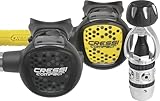
If you want reliable scuba regulators under $500, consider the Cressi Scuba Diving Regulator Kit with its smooth AC2 piston 1st stage and compact 2nd stage for easy handling.
The Cressi XS2/AC2 package provides steady airflow and a versatile octopus.
For frequent divers, the Cressi Intense Use model offers robust performance and comfort.
Mares SXS 62X is lightweight and travel-friendly, while the Cressi Octopus is perfect as a backup.
Keep exploring to find the best fit for your diving needs.
| Image | Name | Editor's Rating | Price |
|---|---|---|---|
|
Cressi AC2 / Compact + Octopus Compact C...
|
|
|

|
Cressi XS2/AC2 Regulator and XS Octopus ...
|
|
|

|
Cressi AC2 / Compact, Silver, INT
|
|
|

|
Mares SXS 62X Scuba Diving Regulator Set...
|
|
|

|
Cressi Octopus XS, light and flexible oc...
|
|
Cressi Scuba Diving Regulator Kit with AC2 Piston 1st Stage and Compact 2nd Stage
- This regulator is made up of the new 2nd...
- Octopus XS Compact uses the same casing...
- Simple piston 1st stage, a "work mule"...
The Cressi Scuba Diving Regulator Kit features an AC2 piston 1st stage paired with a compact 2nd stage designed for ease of use and durability. Crafted in Italy, it offers reliable performance with a self-lubricating jacketed cylinder for smooth operation underwater. The kit includes multiple low-pressure outlets and a high-pressure outlet, enhancing its versatility.
Its lightweight, compact design makes it easy to handle during dives. The 2nd stage’s elastomer cover adds robustness without compromising comfort. This regulator kit is suitable for straightforward maintenance, making it practical for frequent use in rental settings or training environments.
Best for: Beginners, diving schools, and rental operations seeking a dependable and easy-to-maintain scuba regulator kit.
Pros:
- Lightweight and compact for easy underwater handling
- Durable build combining plastic and stainless steel components
- Multiple low-pressure and high-pressure outlets for added versatility
Cons:
- The simple piston 1st stage might lack advanced features for experienced divers
- Warranty period may be shorter than some other models
- Customer ranking suggests it may have limited popularity compared to other regulators
Cressi XS2/AC2 Regulator and XS Octopus Package
- INCLUDED - 1'st Stage, 2'nd Stage,...
- OPTIMAL PERFORMANCE - Experience...
- CUSTOMIZABLE COMFORT - Easily adjust the...
The Cressi XS2/AC2 Regulator and XS Octopus Package delivers dependable performance with a robust design. Its non-balanced flow-by piston first stage ensures steady air supply across different depths. The second stage features a Dive/Pre-Dive Venturi Adjustment for tailored breathing comfort.
Constructed from marine-grade chromed brass and corrosion-resistant polymers, this regulator is built to endure demanding underwater conditions. It includes four low-pressure ports and one high-pressure port, allowing versatile hose arrangements. The package comes with an XS Octopus hose for added convenience.
Best for: New divers and those using stage bottle systems who need a reliable and durable regulator with customizable airflow.
Pros:
- Consistent air delivery with a non-balanced flow-by piston first stage
- Durable materials suited for long-term marine use
- Multiple ports for flexible hose setup and included XS Octopus hose
Cons:
- Airflow might not be as smooth as with balanced first stages
- Weight may be less ideal for travel requiring lightweight gear
- Limited user feedback could affect decision confidence
Cressi Intense Use Scuba Diving Regulator (AC2/Compact)
- Ideal scuba diving regulator for...
- A heavy-duty piston 1st stage,...
- Conical filter with large filtering...
The Cressi Intense Use Scuba Diving Regulator (AC2/Compact) offers reliable performance with a focus on durability and ease of use. Its robust piston 1st stage includes one HP and four LP ports, making it suitable for demanding diving conditions. The compact 2nd stage ensures smooth airflow with a calibrated inhalation mechanism that minimizes dependence on the Venturi effect.
This Italian-made regulator weighs just 923 grams, enhancing comfort and portability for frequent travelers. It features an easy-to-adjust exterior LP regulation and a large-capacity conical filter, simplifying maintenance. The design balances functionality with a lightweight build to support a seamless underwater breathing experience.
Best for: Divers seeking a dependable, easy-to-maintain scuba regulator designed for regular and intensive use.
Pros:
- Durable piston 1st stage with multiple ports for versatility
- Compact and lightweight design improves comfort underwater
- Calibrated inhalation mechanism provides abundant airflow
Cons:
- May lack advanced features desired by technical divers
- Warranty period might be shorter than some other models
- Single-hull 2nd stage might be less robust for extreme conditions
Mares SXS 62X Scuba Diving Regulator Set – First and Second Stage
- COMPACT DESIGN - The SXS 62X Scuba...
- 62X FIRST STAGE - The 62X INT first...
- DYNAMIC FLOW CONTROL - Equipped with...
The Mares SXS 62X Scuba Diving Regulator Set features an ultra-lightweight second stage, known as one of the smallest available. Its first stage has a robust chrome pearl finish and Auto-Sealing Technology that prevents water entry, ensuring dry and reliable operation. Pre-oriented LP and HP ports with Dynamic Flow Control maintain consistent airflow at all depths.
The second stage is crafted from technopolymer and incorporates a Vortex Assisted Design to enhance airflow. Its reversible setup allows for personalized comfort. Additional features include a lateral exhaust tube and a Superflex hose, which improve ease of use and make the regulator well-suited for cold water diving and travel.
Best for: Travel divers and minimalist scuba enthusiasts seeking a compact, reliable regulator set with excellent airflow and cold water performance.
Pros:
- Ultra-lightweight second stage, ideal for travel and ease of use
- Durable first stage with Auto-Sealing Technology for dry performance
- Vortex Assisted Design and reversible second stage for improved airflow and comfort
- Lateral exhaust tube and Superflex hose enhance usability
Cons:
- May have a higher price point due to advanced features and materials
- Limited customer ratings might affect the range of user feedback
- Primarily designed for cold water, less emphasis on warm water conditions
Cressi Octopus – 2nd Stage Scuba Diving Regulator High Quality
- The Octopus XS2 has a body of the 2nd...
- Proven and highly affordable, the...
- Downstream system. Adjustable Venturi...
The Cressi Octopus 2nd Stage regulator combines durability and lightweight design. Constructed mainly from technopolymers with stainless steel parts, it weighs just over 7 ounces. Its adjustable Venturi effect and downstream delivery system ensure smooth, easy breathing underwater.
This regulator is designed for reliable, low-maintenance use, making it ideal for dive schools and rental centers. Certified for diving in temperatures above 10°C, it performs well in common water conditions. Crafted by Cressi, a trusted Italian brand since 1946, it offers quality without complexity.
Best for: Budget-conscious divers and dive operators seeking a dependable, straightforward second stage regulator.
Pros:
- Durable technopolymer and stainless steel construction for lightweight strength
- Adjustable Venturi system enhances breathing comfort
- Certified for use above 10°C, suitable for most recreational dives
- Low maintenance and reliable for frequent use
Cons:
- May not perform optimally in cold water below 10°C
- Predominantly plastic design might be less robust than full-metal models
- Could lack some advanced features found in premium regulators
Factors to Consider When Choosing Scuba Regulators Under $500
When choosing a scuba regulator under $500, you’ll want to focus on durability, breathing performance, and how easy it is to maintain. Consider the weight and portability, especially if you travel often, and make sure it’s compatible with your existing gear.
Keeping these factors in mind will help you find a reliable and comfortable regulator without overspending.
Durability and Materials
Durability plays an essential role in choosing a scuba regulator under $500, as it directly affects your safety and equipment longevity. When selecting a regulator, focus on materials like marine-grade chrome-plated brass for the first stage and technopolymers for the second stage, which resist corrosion and wear. Regulators combining plastic and stainless steel offer a good balance of lightweight design and durability, ideal for frequent or varied diving conditions.
Look for heavy-duty piston designs and reinforced components to boost reliability, especially if you plan intense use or rentals. Keep in mind that heavier regulators often provide better damage resistance, while lighter ones might use less robust materials. Finally, certifications like EN250 guarantee your regulator meets safety standards for different temperatures and environments.
Breathing Performance
Although price limits your options, you can still find scuba regulators under $500 that deliver excellent breathing performance. Look for a second stage with adjustable Venturi effects, so you can customize airflow to your liking. Regulators with a downstream demand valve mechanism often provide consistent, reliable airflow throughout your dive.
Pay attention to the first stage piston design; non-balanced flow-by pistons guarantee stable air delivery at different depths, which matters for smooth breathing. The number of low-pressure ports also plays a role—more ports mean better hose routing and airflow distribution. Finally, lightweight, durable materials reduce breathing resistance, making inhalation easier underwater.
Maintenance and Serviceability
Since proper upkeep guarantees your regulator performs safely and efficiently, you should prioritize ease of maintenance when choosing a scuba regulator under $500. Opt for models with fewer components—they’re easier to service and reduce downtime. Regulators with self-lubricating parts or jacketed cylinders can extend longevity and cut down on routine maintenance.
Look for non-corrosive materials and designs that prevent water intrusion, ensuring reliability and simpler cleaning. A design that allows quick access to internal parts makes routine servicing and inspections straightforward, boosting safety and performance. Also, make sure the regulator comes with a clear, accessible maintenance manual or service guide.
This will simplify upkeep for you and any technicians, helping keep your gear in top shape dive after dive.
Weight and Portability
Beyond maintenance, weight and portability play a big role in choosing a scuba regulator under $500. You want a regulator that’s light enough to carry easily, especially if you travel often. Some models weigh as little as 923 grams (32.6 oz), making them a breeze to pack and transport.
Compact designs with minimal components reduce bulk, fitting neatly into your gear bag without hassle. Look for features like flexible hoses and lightweight materials—they cut down weight without sacrificing performance. A lighter regulator also means less fatigue underwater, keeping you comfortable during long dives.
Consider your diving style and travel habits: if you dive mostly in one spot, a heavier regulator might work; but if you’re always on the move, prioritize portability to make your adventures smoother.
Compatibility With Equipment
When choosing a scuba regulator under $500, you need to verify it fits seamlessly with your existing gear. First, make certain the regulator has compatible ports—check the number and type of low-pressure (LP) and high-pressure (HP) ports it offers. Verify the hose fittings match your hoses’ threads, usually 3/8 inch for LP and 7/16 inch for HP, to avoid connection problems.
Also, consider your tank valve type; some regulators are designed specifically for DIN or Yoke connections, affecting attachment ease. Make sure the regulator’s design allows for smooth integration with accessories like octopuses or alternate air sources. Finally, review manufacturer specs to confirm it’s certified for your dive conditions, such as cold water or high altitude, ensuring peak performance with your current setup.
Warranty and Support
Although price is a crucial factor, you shouldn’t overlook the warranty and support that come with a scuba regulator under $500. Aim for at least a two-year warranty to protect against manufacturing defects and performance issues. Limited warranties often signal a manufacturer’s confidence in their product’s durability.
Check if the coverage includes parts and labor, as this can save you significant repair costs. Some brands also offer extra support like customer service hotlines or online maintenance resources, which can be indispensable when you need guidance. Be sure to read the warranty terms carefully for any conditions or exclusions, such as maintenance requirements or usage limits.
Prioritizing solid warranty and support guarantees your investment lasts and you dive with peace of mind.
Frequently Asked Questions
How Often Should I Service My Scuba Regulator?
You should service your scuba regulator at least once a year or every 100 dives, whichever comes first. Regular maintenance guarantees safety and performance, so don’t skip it, especially if you dive frequently or in harsh conditions.
Can I Use These Regulators for Cold Water Diving?
Yes, you can use some budget-friendly regulators for cold water, but verify they’re specifically rated for it. Otherwise, you might face freezing issues.
Always check manufacturer specs to confirm safe, reliable cold-water performance.
Are These Regulators Compatible With All Scuba Tanks?
Most regulators work with standard scuba tanks, but you’ll want to check if your tank valve type matches the regulator’s connection.
Always verify compatibility to avoid leaks or fitting issues before your dive.
What Warranty Coverage Do Budget Regulators Typically Have?
Budget regulators typically come with a 1- to 2-year warranty covering defects and repairs.
You should check specific brand policies, but expect basic coverage that protects you from manufacturing issues without extended perks.
How Do I Properly Clean and Store My Scuba Regulator?
Want your scuba regulator to last? Rinse it thoroughly with fresh water after every dive, avoid soaking the first stage, let it air dry away from sunlight, and store it in a cool, dry place with dust caps on.
Conclusion
Choosing the right scuba regulator under $500 doesn’t mean you have to compromise on quality or safety. Did you know that nearly 70% of recreational divers prefer gear that balances performance and affordability?
With options like the Cressi and Mares models, you can dive confidently without breaking the bank. Remember, investing in a reliable regulator guarantees smoother, safer dives—giving you peace of mind every time you explore underwater.
Dive smart and enjoy every moment!

I am a passionate explorer of the deep sea, endlessly fascinated by the mysteries that lie beneath the ocean’s surface. From the graceful glide of a manta ray to the powerful presence of a great white shark, I find inspiration in every creature that calls the sea its home. My love for marine life began at an early age and has grown into a lifelong mission to study, understand, and share the wonders of our blue planet. Through Planet Shark Divers, I combine my enthusiasm for sharks and other sea animals with a dedication to education and conservation. Each article is crafted to unravel myths, reveal fascinating facts, and inspire respect for the extraordinary life forms that thrive in the depths. Whether it’s the biology of a hammerhead or the mystery of the deep abyss, my goal is to bring the ocean closer to everyone’s heart and mind.