
You’ll dive confidently with the top scuba regulators of 2025, like Cressi’s AC2 Piston 1st Stage paired with the lightweight Compact 2nd Stage, or AquaLung Titan’s balanced diaphragm and durable design.
For intense use, the Cressi Intense and XS2/AC2 packages offer reliable airflow and versatile port options. The Explorer 145 PSI Octopus gives a comfy backup for safety.
Each combines durability, easy maintenance, and comfort to match your diving style.
Keep exploring to find the perfect fit for your underwater adventures.
| Image | Name | Editor's Rating | Price |
|---|---|---|---|
|
Cressi AC2 / Compact + Octopus Compact C...
|
|
|

|
AquaLung Titan Regulator
|
|
|

|
Cressi AC2 / Compact, Silver, INT
|
|
|

|
Cressi XS2/AC2 Regulator and XS Octopus ...
|
|
|
|
Hanperal 145 PSI Explorer Scuba Diving D...
|
|
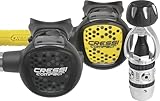
Cressi Scuba Diving Regulator Kit – AC2 Piston 1st Stage and Compact 2nd Stage
- This regulator is made up of the new 2nd...
- Octopus XS Compact uses the same casing...
- Simple piston 1st stage, a "work mule"...
The Cressi Scuba Diving Regulator Kit combines reliable performance with practical design. It includes the AC2 piston 1st stage and the lightweight Compact 2nd stage, both crafted from stainless steel and advanced polymers. This ensures durability and consistent function during your dives.
Maintenance is straightforward thanks to its minimal components and a self-lubricating jacketed cylinder. The regulator offers four low-pressure and one high-pressure outlet, providing versatile connection options. Made by Cressi in Italy, this kit is built for lasting use.
Best for: beginner divers, dive schools, and rental programs seeking a durable and user-friendly regulator.
Pros:
- Durable AC2 piston 1st stage paired with a lightweight 2nd stage
- Easy maintenance due to minimal parts and self-lubricating design
- Constructed with robust stainless steel and high-tech polymers
- Multiple outlet options for flexible setup
Cons:
- May lack advanced features preferred by experienced divers
- Weight might be a consideration for those seeking ultra-light gear
- Popular but not ranked as the top regulator choice among all users
AquaLung Titan Regulator
- 1st Stage: The balanced diaphragm...
- The T-shape design is compact and...
- The unique forged body uses less brass,...
The AquaLung Titan Regulator offers a lightweight and durable solution for divers. Its forged body uses less brass, reducing weight without losing strength. The balanced diaphragm mechanism delivers smooth, consistent breathing while safeguarding internal parts from harsh conditions.
Its compact T-shaped design optimizes hose routing, with MP and HP outlets placed for easy hose management. The polyurethane outer skin provides added protection, enhancing the regulator’s durability and usability. This thoughtful design makes the AquaLung Titan a dependable choice for focused diving.
Best for: Divers seeking a lightweight, durable regulator with efficient hose management and reliable breathing performance.
Pros:
- Lightweight forged body with reduced brass for strength and ease of handling.
- Balanced diaphragm ensures smooth, consistent airflow and internal protection.
- Compact T-shaped design for streamlined hose routing and better usability.
Cons:
- May have a higher price point due to advanced materials and design.
- Polyurethane outer skin could show wear with extreme or prolonged use.
- Customization options and gear compatibility details might be limited.
Cressi Intense Use Scuba Diving Regulator (AC2/Compact)
- Ideal scuba diving regulator for...
- A heavy-duty piston 1st stage,...
- Conical filter with large filtering...
The Cressi Intense Use Scuba Diving Regulator (AC2/Compact) is designed for divers seeking durable and reliable equipment. Its heavy-duty piston 1st stage includes one high-pressure and four low-pressure ports, providing versatility. The compact 2nd stage delivers smooth airflow through an innovative inhalation mechanism that reduces dependence on the Venturi effect.
The regulator’s asymmetrical frontal cover enhances diaphragm movement for precise breathing performance. Weighing just 923 grams, it is easy to carry and maintain. This Italian-made regulator is well-suited for intense use, making it a solid choice for dive centers and frequent travelers.
Best for: Divers looking for a robust, easy-to-maintain regulator that offers smooth airflow and dependable performance on every dive.
Pros:
- Heavy-duty piston 1st stage with multiple ports for flexibility.
- Innovative inhalation system ensures smooth and abundant airflow.
- Compact and lightweight design enhances comfort and usability.
Cons:
- May be limited by having only one high-pressure port.
- Warranty might be shorter compared to some other models.
- Could lack some advanced features preferred by expert divers.
Cressi XS2/AC2 Regulator and XS Octopus Package
- INCLUDED - 1'st Stage, 2'nd Stage,...
- OPTIMAL PERFORMANCE - Experience...
- CUSTOMIZABLE COMFORT - Easily adjust the...
The Cressi XS2/AC2 Regulator and XS Octopus Package offers consistent air delivery with its non-balanced piston 1st stage, designed for steady performance at various depths. Its 2nd stage features a Dive/Pre-Dive Venturi Adjustment, allowing divers to customize their breathing experience.
Built from marine-grade chromed brass and durable polymers, this regulator ensures long-lasting reliability. It includes four low-pressure ports and one high-pressure port, providing versatile hose configurations. The 33-inch octopus hose adds practical convenience for safety.
Lightweight and EN250/2000 certified, this Italian-made set delivers dependable breathing performance ideal for new divers and those using stage bottle systems. It balances durability with functional design for various diving conditions.
Best for: New divers and stage bottle users seeking a reliable, customizable regulator package.
Pros:
- Non-balanced piston 1st stage ensures steady air delivery across depths
- Venturi Adjustment on the 2nd stage allows tailored breathing feel
- Made from marine-grade chromed brass and corrosion-resistant polymers
- Includes multiple ports for flexible hose setups
Cons:
- Weight may be higher compared to some modern lightweight regulators
- Non-balanced 1st stage might not be ideal in extreme depth or high-demand scenarios
- Limited customer ratings could mean less comprehensive user feedback
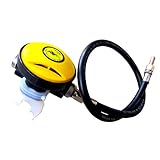
145 PSI Explorer Scuba Diving Regulator Octopus Hookah
- 22" low pressure hose.
- Silicone mouthpiece.
- Free flow resistant.
The 145 PSI Explorer Scuba Diving Regulator Octopus Hookah offers smooth breathing with minimal effort. Its mechanically balanced design reduces inhalation and exhalation effort, making underwater breathing comfortable. The free flow resistant feature and under-chin exhaust system keep bubbles away from your view, enhancing clarity.
Built with electro-less nickel-plated brass and silicone, this regulator is both durable and lightweight. It includes a 22-inch low-pressure hose, suitable for most recreational diving setups. The 145 PSI intermediate pressure supports reliable performance as a secondary air source.
Best for: Recreational scuba divers seeking a dependable and comfortable backup regulator for safe underwater breathing.
Pros:
- Mechanically balanced for easy breathing effort
- Free flow resistant with under-chin exhaust to keep bubbles clear
- Durable materials with a lightweight construction
- Includes a convenient 22-inch low-pressure hose
Cons:
- Hose length may be shorter than preferred by some divers
- Limited to 145 PSI intermediate pressure, possibly restricting some setups
- May have a modest popularity compared to other regulator options
Factors to Consider When Choosing a Scuba Regulator
When choosing a scuba regulator, you’ll want to focus on breathing performance and consistent airflow to guarantee comfort underwater. Consider the material’s durability and weight since they affect both longevity and ease of use.
Don’t forget to check maintenance needs and port configuration for flexibility during your adventures.
Breathing Performance Consistency
Although scuba regulators come in various designs, you’ll want one that maintains consistent breathing performance at all depths to assure ease of inhalation and exhalation. Look for a balanced diaphragm mechanism, as it guarantees steady airflow regardless of depth changes, making your breathing effortless underwater.
While non-balanced flow-by piston designs can deliver reliable air, their performance may fluctuate with pressure variations. You’ll also benefit from a regulator calibrated to provide abundant airflow without depending heavily on the Venturi effect, which can sometimes complicate breathing. Features like Dive/Pre-Dive Venturi adjustment let you tailor your breathing experience for maximum comfort.
Additionally, regulators with protective designs shield internal parts from environmental factors, helping maintain consistent performance and reliability throughout your dives.
Material Durability Quality
Since your scuba regulator endures harsh underwater conditions, choosing materials that offer durability and corrosion resistance is crucial. Marine-grade chromed brass and hi-tech polymers are top choices, providing longevity and protecting against corrosion. You might find regulators made from plastic combined with stainless steel, striking a great balance between lightweight design and strength, suitable for various dive environments.
Protective features, like polyurethane outer skins, add extra defense against shocks and the elements, extending your regulator’s lifespan. Keep in mind, simpler designs with fewer parts often mean less maintenance hassle. Ultimately, high-quality materials guarantee your regulator delivers reliable air flow and safety at different depths, letting you focus on enjoying your dive with confidence.
Weight and Size
Choosing the right weight and size for your scuba regulator can greatly impact your comfort and mobility underwater. Lightweight models, often around 1.76 kg (3.9 lbs) or less, reduce fatigue during long dives and make gear management easier.
If you travel frequently, consider compact regulators weighing about 35 ounces (1 kg); their smaller dimensions, roughly 11.5 x 11.18 x 3.98 inches, fit neatly into your dive bag. Smaller, lighter regulators also offer a streamlined profile, cutting down drag and enhancing maneuverability underwater.
On the other hand, heavier models exceeding 2 kg (4.4 lbs) might feel bulkier and less comfortable over time. By choosing a regulator that balances weight and size to suit your diving style, you’ll enjoy greater ease and confidence every dive.
Maintenance and Serviceability
Beyond weight and size, maintaining your scuba regulator plays a key role in its performance and your safety underwater. You’ll want a regulator that’s easy to service, ideally with a simple design and fewer components to reduce maintenance complexity and cost.
Look for models with user-friendly features like external low-pressure (LP) regulation adjustments, which let you fine-tune your setup without hassle. Compatibility with common parts is another plus, helping you find replacements quickly when needed.
Port Configuration Flexibility
When you set up your scuba regulator, the flexibility of its port configuration can make a big difference in how easily you manage your equipment underwater. Port configuration flexibility means having multiple high-pressure (HP) and low-pressure (LP) ports arranged to fit your needs. Most regulators offer at least one HP port for your pressure gauge or computer, essential for tracking tank pressure.
Having four or more LP ports lets you customize hose routing, improving comfort and accessibility. The position of these ports matters, too—it affects how easily you can use and maintain your gear, especially when adding accessories. Choosing a regulator with flexible port options guarantees you can adapt your setup for various dive styles, from recreational to technical, making your underwater experience smoother and more efficient.
Environmental Suitability
Port configuration flexibility helps tailor your setup for different plunge styles, but you’ll also want to think about how your regulator performs in various environments. Choose a model designed for the conditions you immerse yourself in—cold water or saltwater require specific features. Look for a balanced diaphragm mechanism to guarantee consistent airflow despite changes in depth and pressure.
Protective elements like a polyurethane outer skin shield internal parts from sand, debris, and corrosion. Verify the regulator’s certification, such as EN250/2000, to confirm it’s tested for reliability across conditions. Also, consider the number and placement of pressure ports; proper hose routing can make a huge difference when dealing with currents or confined spaces.
Picking the right regulator means matching it to your diving environment for safety and comfort.
Brand Reputation History
Although you might be tempted to focus solely on features, considering a brand’s reputation history is vital when choosing a scuba regulator. Established companies have years of experience producing reliable and safe equipment, giving you peace of mind underwater. These brands often invest heavily in research and development, enhancing performance and user satisfaction.
Checking customer reviews and ratings helps you gauge reliability—higher ratings usually mean a stronger reputation among divers like you. Plus, reputable brands tend to offer better customer service and support, which is important if you ever face equipment issues. By trusting a well-regarded brand, you’re more likely to get a regulator that performs consistently and stands up to the demands of your dives.
Price and Warranty
Choosing the right scuba regulator means balancing price and warranty to fit your needs and budget. Affordable options start around $200, while premium models can exceed $800, often offering advanced materials and technology that boost performance and durability.
When you shop, check the warranty carefully—it usually ranges from one to two years and covers manufacturing defects, giving you peace of mind for long-term use. Don’t forget to factor in maintenance costs; some regulators require more frequent servicing, which can add up over time.
Frequently Asked Questions
How Often Should I Service My Scuba Regulator?
You should service your scuba regulator at least once a year or after every 100 dives. Regular maintenance guarantees safety, reliability, and peak performance underwater, so don’t skip your annual tune-up or post-dive check.
Can Regulators Be Used in Both Saltwater and Freshwater?
You can use regulators in both saltwater and freshwater without issues. Over 70% of divers switch between these environments, so just rinse your gear thoroughly after each dive to keep it functioning smoothly and avoid corrosion.
What Is the Average Lifespan of a Scuba Regulator?
You can expect your scuba regulator to last about 10 years with proper care. Regular servicing and rinsing after dives will keep it functioning well, so don’t skip maintenance to extend its lifespan.
Proper care is essential to ensure your equipment remains reliable and safe. Always follow the manufacturer’s recommendations for servicing intervals. This will help prevent unexpected failures during dives.
Are There Regulators Suitable for Cold Water Diving?
Yes, you’ll find regulators designed specifically for cold water diving. They feature environmental seals and materials that prevent freezing, ensuring reliable performance and safety even in icy conditions.
Always choose one rated for your dive environment.
How Do I Properly Clean and Store My Regulator After Use?
You should rinse your regulator thoroughly with fresh water, avoiding direct spray into the first stage. Let it dry completely in a cool, shaded area.
Store it loosely in a cool, dry place, away from sunlight.
Conclusion
Choosing your perfect scuba regulator means prioritizing performance, precision, and peace of mind. With options like the Cressi and AquaLung series, you’ll dive deeper, breathe better, and explore effortlessly.
Remember, reliable regulators reduce risks and ramp up your relaxation underwater. So, select smartly, stay safe, and savor every serene second beneath the surface.
Dive daringly with confidence and comfort—your underwater adventure awaits!

I am a passionate explorer of the deep sea, endlessly fascinated by the mysteries that lie beneath the ocean’s surface. From the graceful glide of a manta ray to the powerful presence of a great white shark, I find inspiration in every creature that calls the sea its home. My love for marine life began at an early age and has grown into a lifelong mission to study, understand, and share the wonders of our blue planet. Through Planet Shark Divers, I combine my enthusiasm for sharks and other sea animals with a dedication to education and conservation. Each article is crafted to unravel myths, reveal fascinating facts, and inspire respect for the extraordinary life forms that thrive in the depths. Whether it’s the biology of a hammerhead or the mystery of the deep abyss, my goal is to bring the ocean closer to everyone’s heart and mind.