
If you want the best scuba diving book to delve into in 2025, choose one that matches your skill level and offers thorough coverage of techniques, safety, and equipment.
Look for vibrant visuals and expert authors with real-world experience to guide you confidently underwater. Practical tips and updated safety guidelines are key to enjoying every dive safely.
Keep exploring to discover how to pick a book perfectly tailored to your diving journey and interests.
| Image | Name | Editor's Rating | Price |
|---|---|---|---|
|
InnoBeta Scuba Diving Gifts, Journal Pen...
|
|
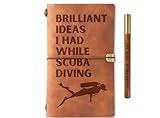
InnoBeta Scuba Diving Gifts Journal Pen Set and Notebook
- Ideal Gift - Premium vegan leather cover...
- Exquisite Design - Unique appearance,...
- Perfect size - 7.8" * 5" (20 cm * 12.5...
The InnoBeta Scuba Diving Gifts Journal Pen Set and Notebook offers a compact and stylish way to record your underwater experiences. It features a premium vegan leather cover with unique patterns that provide both durability and a soft touch. Inside, 70 sheets allow for ample journaling or sketching during your dives.
Designed for convenience, this set includes card slots, a zippered pocket, and a secure strap to keep your essentials organized and safe. Its lightweight and portable size make it ideal for travel and outdoor use. The notebook blends functionality and style, suited for divers who enjoy documenting their adventures.
Best for: Scuba diving enthusiasts and travelers seeking a versatile, portable journal to capture memories and organize small items.
Pros:
- Durable vegan leather cover with distinctive patterns
- Multifunctional interior with card slots and zippered storage
- Lightweight and easy to carry for travel and outdoor use
Cons:
- Contains 70 sheets, which might be limited for frequent journalers
- Brown cover may show wear or stains over time
- Available starting June 15, 2025, so not currently purchasable
Factors to Consider When Choosing Scuba Diving Books
When picking a scuba diving book, make sure it matches your skill level and offers the right depth of content. Check if the visuals and illustrations help clarify complex ideas. Also, consider the author’s expertise and whether the book includes practical tips you can apply underwater.
Skill Level Appropriateness
Anyone picking out a scuba diving book should match it to their skill level to get the most from their reading. If you’re a beginner, look for books that cover basic concepts, safety protocols, and essential equipment, often with clear illustrations and simple language.
As you gain experience, intermediate books can help you sharpen skills by introducing advanced techniques, underwater navigation, and dive theory. For advanced divers, specialized texts on technical topics like decompression theory, underwater photography, or cave and wreck diving provide valuable insights.
Choosing a book that fits your current expertise guarantees the content is relevant and practical, which keeps you motivated and avoids frustration. Tailoring your reading to your skill level boosts your learning and prepares you better for safe, enjoyable dives.
Content Depth and Detail
Matching a book to your skill level lays the groundwork, but the depth and detail of the content truly shape your understanding of scuba diving. You want a book that thoroughly covers diving techniques, safety protocols, and equipment use to build solid expertise. Look for in-depth case studies or personal accounts that reveal real-world challenges and solutions, adding practical insight.
It’s also important the book addresses environmental concerns and conservation, helping you appreciate and protect marine ecosystems. Practical sections on dive site descriptions, current conditions, and local marine life can enrich your planning and experiences underwater. By choosing a book with extensive, detailed content, you’ll gain the knowledge needed to dive confidently and responsibly.
Visuals and Illustrations
A scuba diving book with high-quality visuals and illustrations can make complex techniques and underwater environments much easier to understand. When you choose a book rich in vibrant photographs and detailed diagrams, you’ll find it easier to grasp tricky concepts like buoyancy, dive planning, and safety protocols. Visual aids such as charts and infographics act as handy quick-reference tools, helping you retain essential information more effectively.
Beyond clarity, stunning illustrations showcase the beauty and diversity of marine life, inspiring your passion for diving. By engaging both your mind and imagination, a well-illustrated book not only educates but also motivates you to explore the underwater world with confidence and curiosity.
Author Expertise Credibility
When choosing a scuba diving book, you’ll want to pay close attention to the author’s expertise and credentials. Look for authors with strong certifications and years of diving experience, as they bring valuable insights. Consider those recognized as experts in areas like marine biology or underwater photography, especially if they’ve published multiple works.
Check if the author contributes to reputable diving magazines or actively participates in the scuba community through teaching or research. Their involvement often indicates credibility. Reading reviews can also help you gauge the author’s reputation and the usefulness of their knowledge.
Finally, prioritize authors who’ve been on extensive diving expeditions or research projects—they offer firsthand experience that enriches the content and makes the book a reliable resource for your diving journey.
Practical Tips Included
Beyond the author’s expertise, you should also focus on the practical tips a scuba diving book offers. Look for books that cover safety protocols, equipment handling, and emergency procedures to boost your diving skills confidently. Practical advice tailored to your experience level—whether beginner, intermediate, or advanced—makes learning effective and relevant.
Books featuring real-life diving experiences or case studies can give you valuable insights and help you avoid common mistakes. Don’t forget to check if the book includes clear illustrations or photos that explain techniques, marine life, and dive sites vividly. Updated information on diving regulations, environmental concerns, and conservation efforts is equally important to keep you informed and responsible underwater.
Prioritizing these practical elements guarantees your dive preparation is thorough and safe.
Book Format and Size
Although content is essential, the book’s format and size greatly affect how you use it during your scuba adventures. If you want detailed illustrations and maps, larger books suit you best, but they can be bulky to carry. Smaller, paperback books are lighter and more travel-friendly, ideal for quick reference.
Hardcover options offer durability for outdoor use, while spiral-bound books lay flat, making them perfect for note-taking during training or dives. Also, consider the page count: longer books deliver in-depth info, while shorter ones provide concise guides. Don’t overlook waterproof pages or protective covers—they protect your book from water damage, extending its life underwater.
Choosing the right format and size guarantees your scuba book stays handy, practical, and ready whenever you dive.
Updated Safety Guidelines
Since scuba diving safety protocols constantly evolve, you need books that reflect the latest guidelines to dive confidently and securely. Look for scuba diving books that incorporate updated safety information from authorities like the Divers Alert Network (DAN), which regularly shares best practices on dive planning, emergency procedures, and equipment use.
Books aligned with current standards from PADI and NAUI guarantee you’re learning the most recent safety measures based on new research and incident data. Staying informed about evolving protocols, such as using dive computers and maintaining effective buddy systems, helps you reduce risks like decompression sickness and equipment failure.
Choosing a book with these updated safety guidelines prepares you to dive smarter and safer, keeping you ready for any underwater challenges.
Frequently Asked Questions
What Certifications Are Required for Advanced Scuba Diving?
You’ll need an Advanced Open Water Diver certification, which builds on basic skills and introduces deeper dives and navigation.
Most agencies require you to complete specific specialty dives to earn this qualification.
How Do I Prevent Ear Barotrauma While Diving?
You prevent ear barotrauma by equalizing early and often during descent, using the Valsalva or swallowing technique. Descend slowly, avoid diving with congestion, and stop if you feel pain to protect your ears effectively.
Equalizing helps balance the pressure in your middle ear with the external water pressure. If you feel discomfort, pause your descent and try to equalize again. Never force equalization, as this can cause injury.
What Are the Best Dive Sites Worldwide for Beginners?
You’ll love diving in Bonaire, Maldives, or the Great Barrier Reef—calm waters and abundant marine life make them perfect for beginners. These sites offer gentle conditions, easy entry, and vibrant underwater scenes to boost your confidence.
They provide a safe and enjoyable environment to explore the underwater world. The clear visibility and warm temperatures add to the comfort for new divers. Each location features diverse marine life, making every dive a memorable experience.
How Should I Maintain My Scuba Gear After a Dive?
You should rinse your scuba gear with fresh water immediately after a dive, avoid direct sunlight when drying, store it in a cool, dry place, and regularly check for damage or wear to keep everything in top condition.
Make sure to thoroughly clean all components, including regulators, masks, fins, and wetsuits, to prevent salt and debris buildup.
Allow your gear to dry completely before storing it to avoid mold and mildew growth.
What Safety Protocols Are Essential for Night Diving?
Night diving’s like exploring a hidden world, so you’ve got to use strong lights, buddy up, check your gear twice. Plan your route carefully, watch your air supply, and communicate clearly to stay safe in the dark depths.
Conclusion
Choosing the best scuba diving book to explore in 2025 isn’t just about flipping pages; it’s about flipping your skills, safety, and passion all at once. You want a guide that matches your level, offers clear visuals, and shares expert tips—like the InnoBeta Scuba Diving Gifts Journal Pen Set and Notebook does.
When your book’s depth meets your dive dreams, coincidence feels like destiny. So, grab your perfect book, and plunge deep into adventure.

I am a passionate explorer of the deep sea, endlessly fascinated by the mysteries that lie beneath the ocean’s surface. From the graceful glide of a manta ray to the powerful presence of a great white shark, I find inspiration in every creature that calls the sea its home. My love for marine life began at an early age and has grown into a lifelong mission to study, understand, and share the wonders of our blue planet. Through Planet Shark Divers, I combine my enthusiasm for sharks and other sea animals with a dedication to education and conservation. Each article is crafted to unravel myths, reveal fascinating facts, and inspire respect for the extraordinary life forms that thrive in the depths. Whether it’s the biology of a hammerhead or the mystery of the deep abyss, my goal is to bring the ocean closer to everyone’s heart and mind.